Wonder on the Waterline Trail
Written by Elena Johnson for the 2026 MNPS Kelseya winter newsletter
Just a few miles southwest of Helena off Orofino Gulch Road, the waterline loop trail casually meanders along the city's old water supply line, giving a peek into the relationship between landforms and human infrastructure.
While the entire loop makes for a fun hike, my favorite spot is a little shaded section at the bottom of the trail. As you walk, sounds shift and stir between gently rippling water, whooshing cars, chirping birds, falling pinecones, and fluttering leaves. The west facing slope is covered in a mix of conifers that provide year round structure and mesmerizing dappled light.
Weekly walks from spring to fall give way to new fascinations with every visit. In early spring, darling purple bells of Clematis occidentalis drape around tree trunks and across shrub canopies. Delicate Calypso bulbosa orchids can be spotted by the careful observer, adding enchantment to the scene.
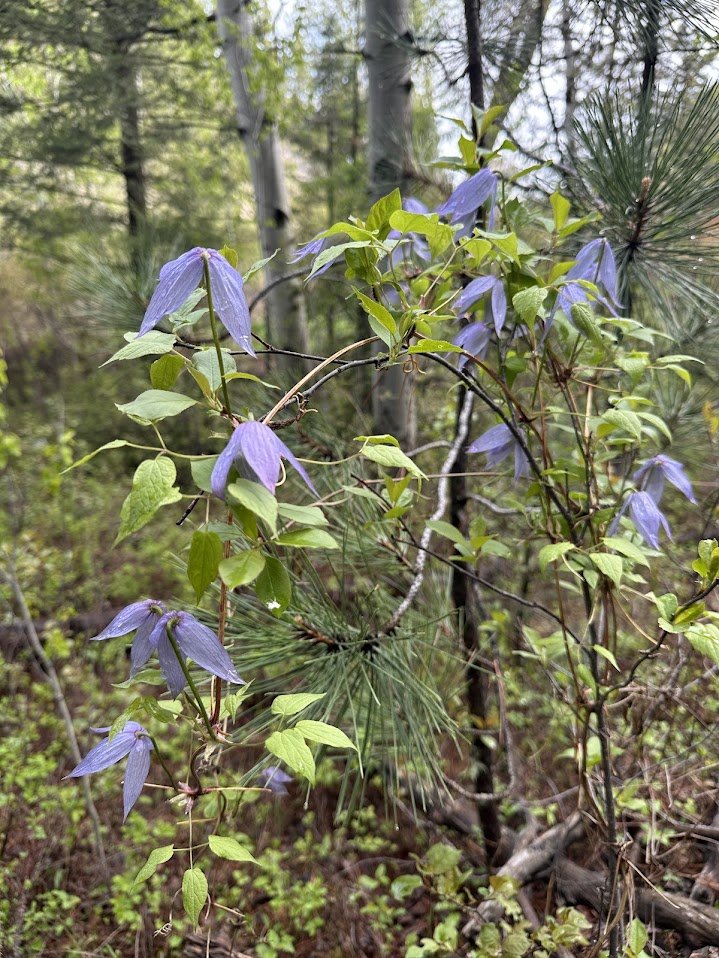
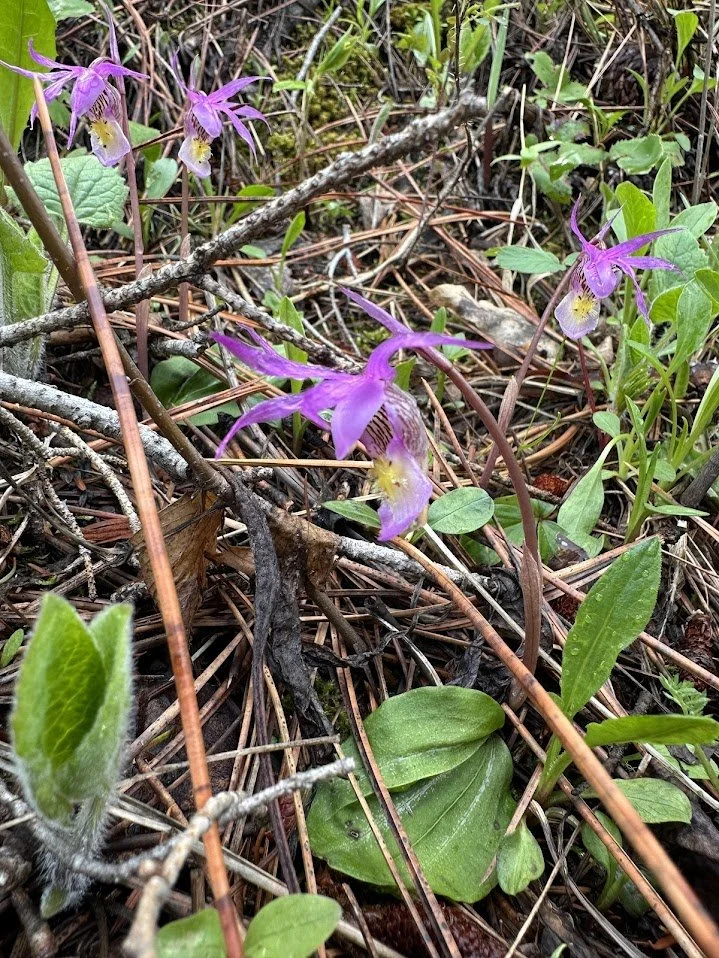
Clematis occidentalis (left), Calypso bulbosa (right)
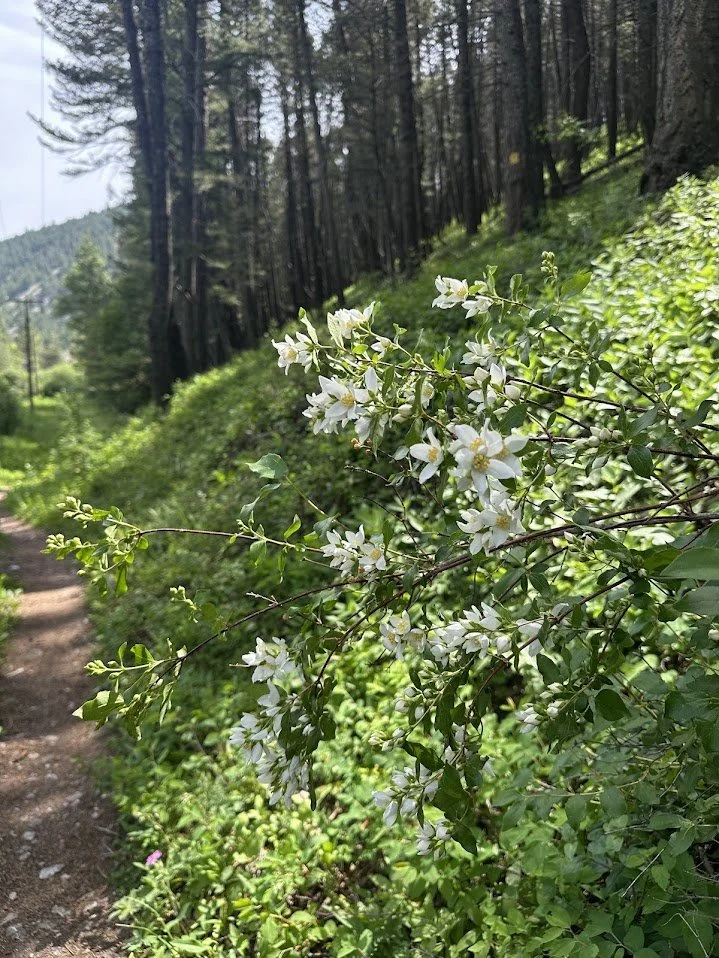
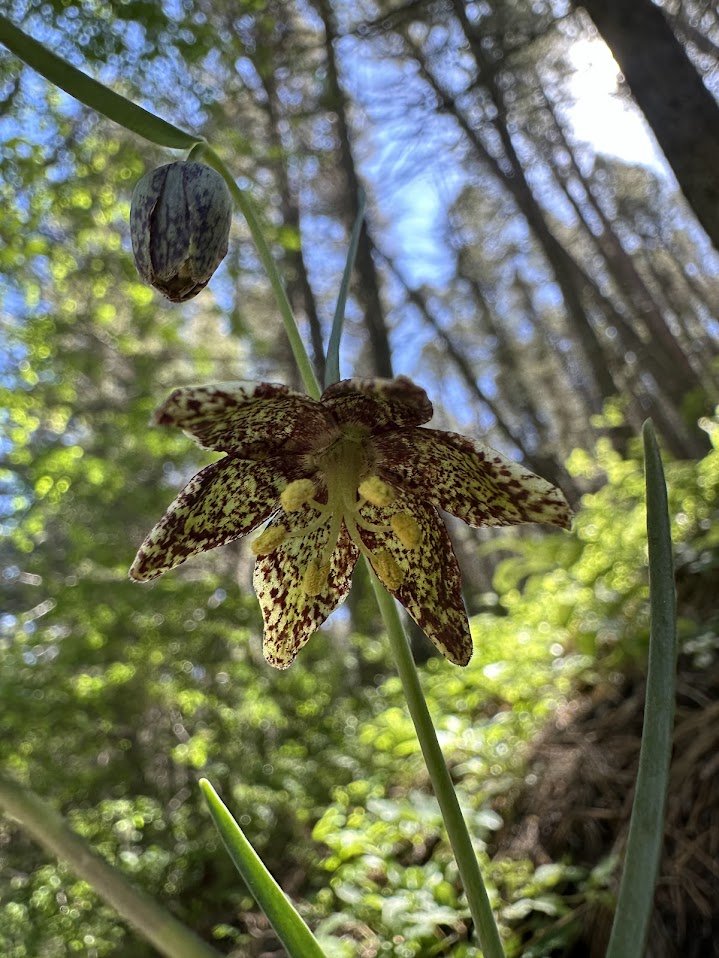
Philadelphus lewisii (left), Fritillaria atropurpurea (right)
Next, Thalictrum occidentalie puts on a subtle, but spectacular show with its dainty chandelier like flowers that flicker in the breeze. Meanwhile, Mahonia repens brightens the path with sprays of yellow and Arctostaphylos uva-ursi puckers with tiny pink and white blossoms.
Come June, fragrant white blooms of Philadelphus lewisii, Cornus sericea, and Rosa acicularis beckon the transition from spring to summer. Beneath the flowering shrubs, an elegant display of beauties such as Campanula rotundifolia, Penstemon procerus, Heuchera cylindrica and Allium cernuum bursts and buzzes with insects. A lone spotted Fritillaria atropurpurea makes for a delightful discovery, and here and there, Cypripedium montanum can be found carrying on the orchid magic.
Fascination persists throughout the summer as seed heads, rose hips, and berries begin taking shape and creating new combinations of colors and textures. Shades of reds, whites, blues and deep purples decorate the forest from the ground up.
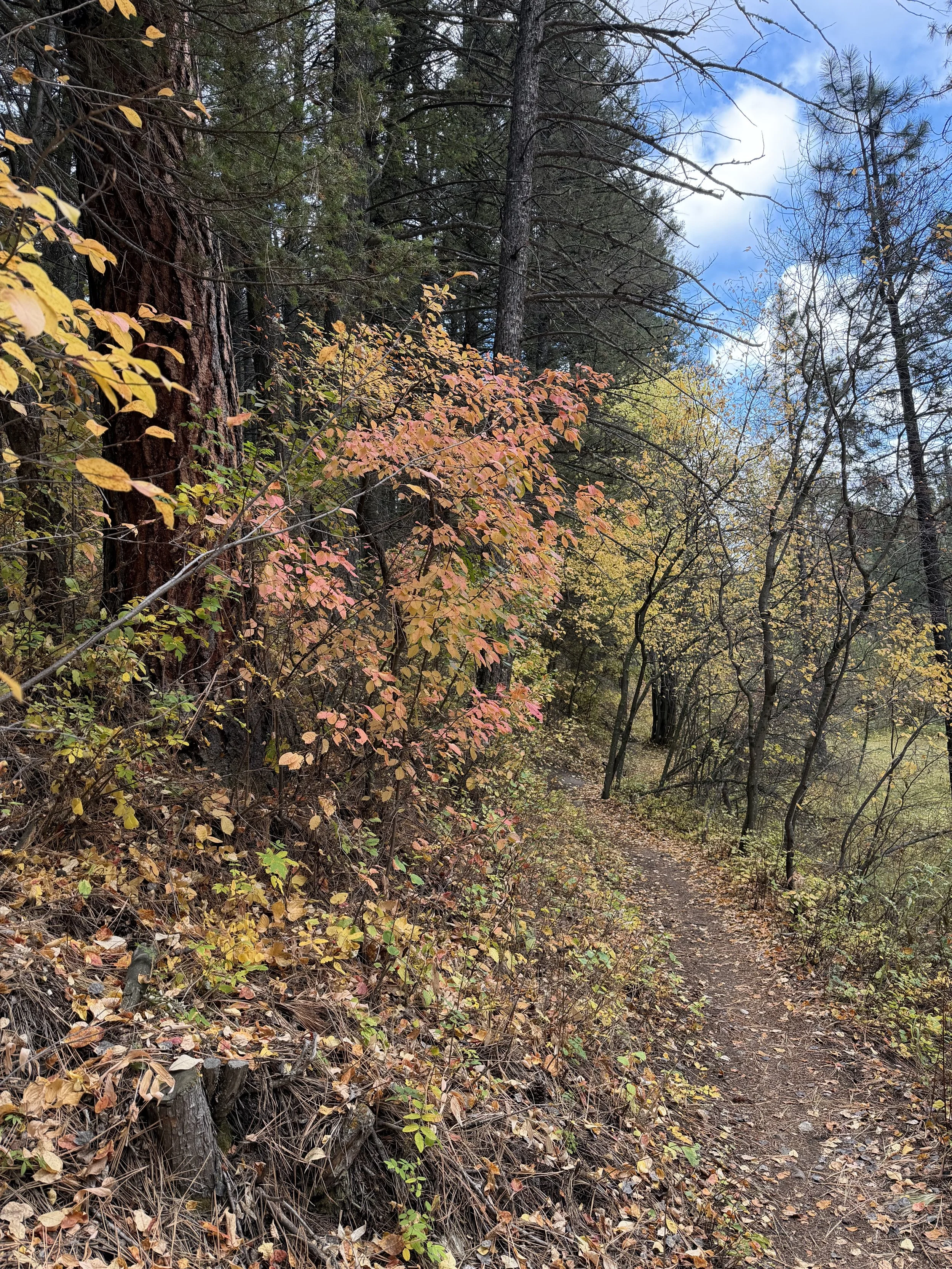
Fall brings fireworks exploding with vivid oranges, whites and yellows of dogwoods, chokecherries and rocky mountain maples that descend to an understory tapestry of marbled wild rose, snowberry, and oregon grape leaves.
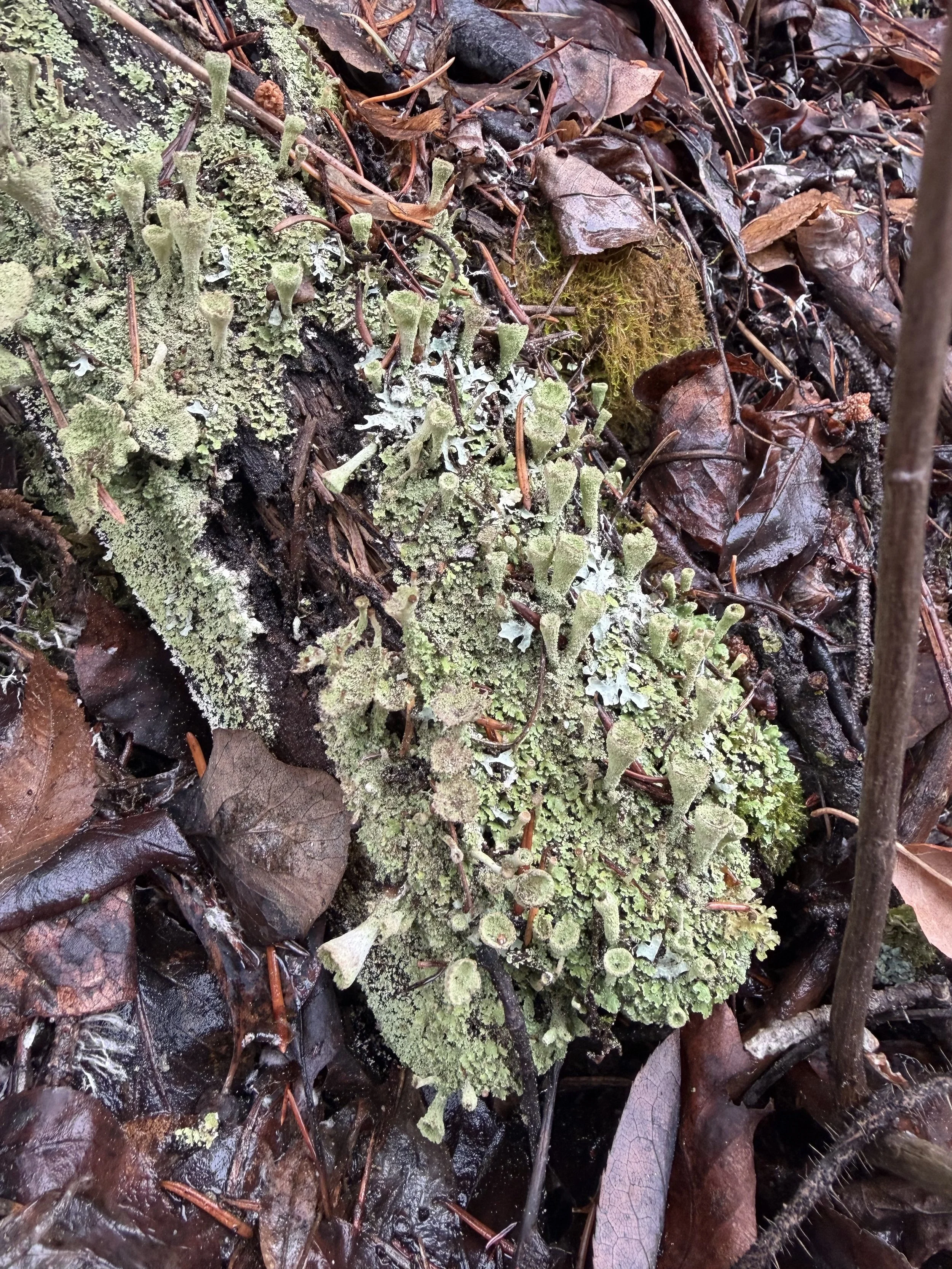
Once the foliage has disappeared, a mesh of twisting and reaching branches is revealed. It’s easy to spot chickadees bouncing around, foraging for food. The minty hues of lichen almost glow in winter’s grayness, while deep green masses of moss blanket the forested hillside.
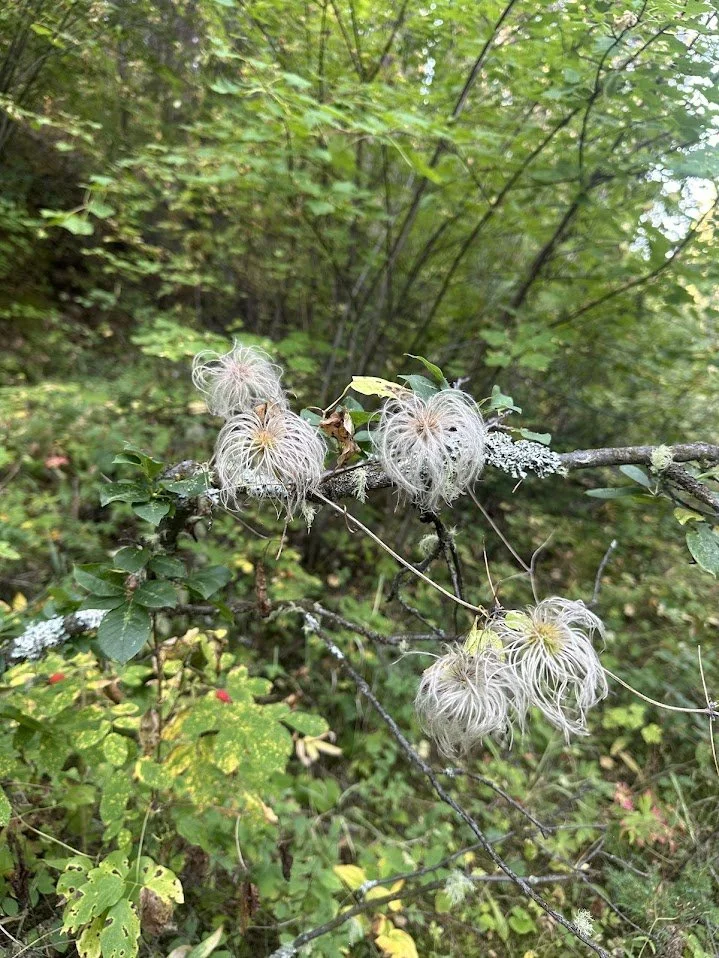
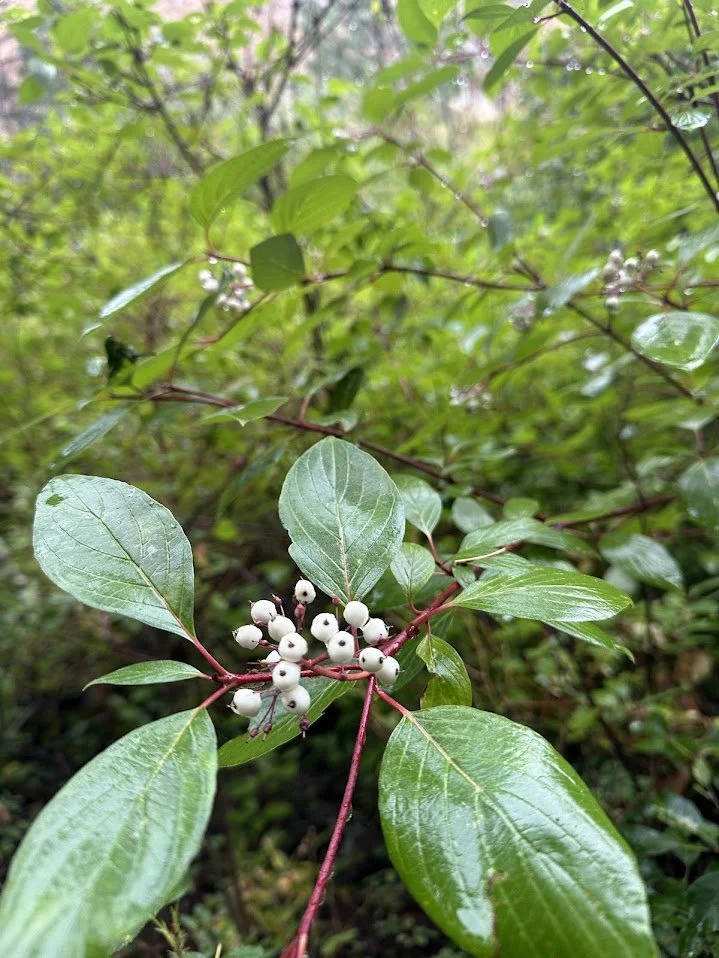
Clematis occidentalis seed heads (left), Cornus serica berries (right)
All of this wonder is jammed into a flat trail that’s about a quarter mile long and takes less than ten minutes to get to from my house. As a garden designer, observing the same place(s) regularly throughout the year has an immense impact on my understanding of native plant communities and aesthetics. As a human, there’s something truly profound about experiencing the passage of time through nature and I’m endlessly grateful to have access so close to home.